NCHR Participates in Baku International Summit and Stresses the Need to Harness Artificial Intelligence within a Human Rights Framework
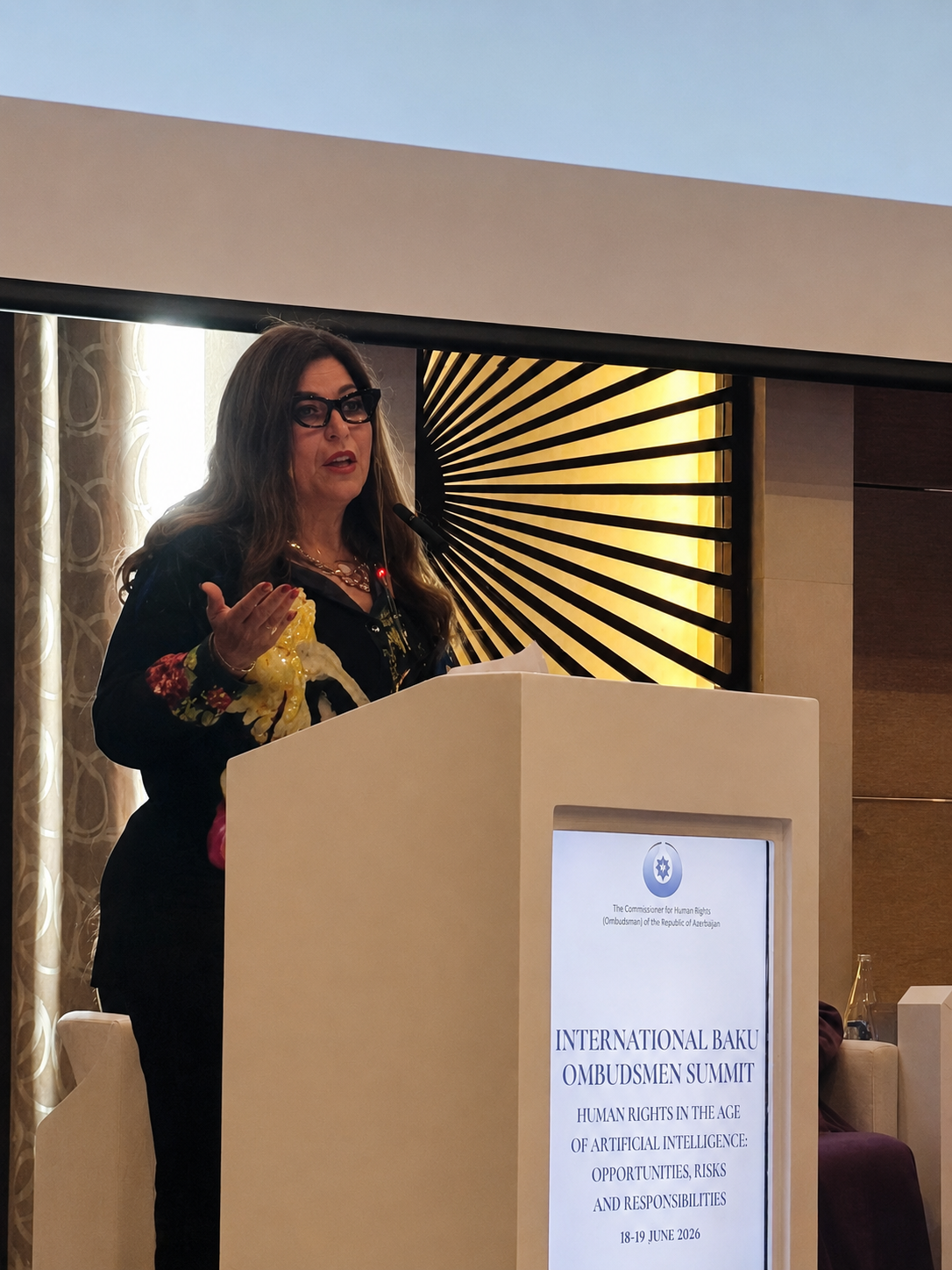
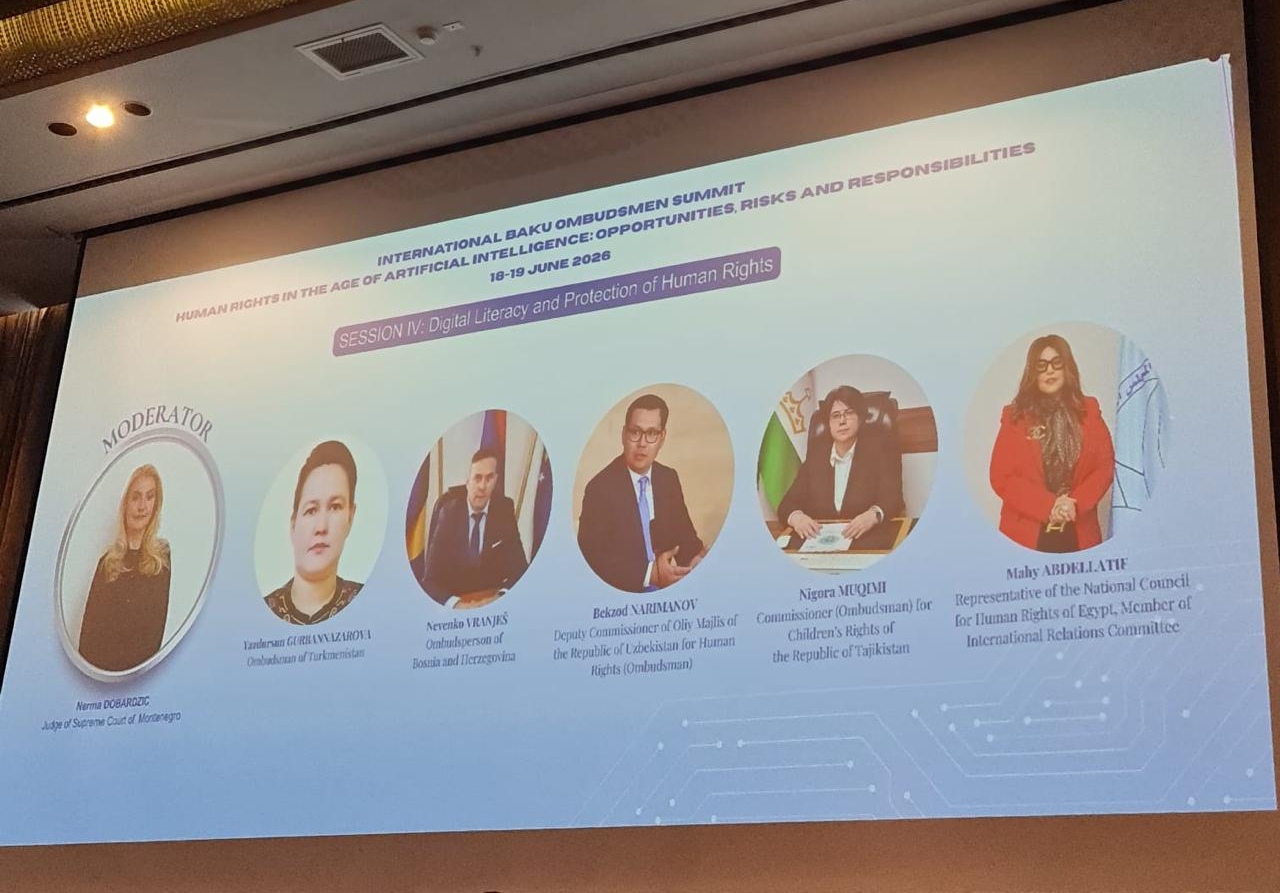
Ambassador Dr. Mahy Abdellatif, Member of the National Council for Human Rights (NCHR) and Secretary of its International Relations Committee, participated in the International Ombudsmen Summit held in Baku, Azerbaijan, under the theme “Human Rights in the Age of Artificial Intelligence: Opportunities and Risks.” Held under the auspices of H.E. Ilham Aliyev, President of the Republic of Azerbaijan, the summit brought together representatives of national human rights institutions, international experts, and decision-makers from around the world.
The summit examined the growing impact of artificial intelligence and digital transformation on the human rights landscape in light of rapid technological advancements and the new opportunities and challenges they present at both the national and international levels.
During her participation, Ambassador Dr. Mahy Abdellatif emphasized that the global expansion of artificial intelligence and digital technologies has created a new reality that requires the adoption of a balanced human rights-based approach. Such an approach, she noted, should enable societies to benefit from the significant opportunities offered by these technologies while ensuring the establishment of appropriate safeguards to prevent any adverse impact on fundamental rights and freedoms.
She explained that AI applications are increasingly contributing to scientific advancement, improving healthcare services, and expanding access to knowledge. They also have the potential to strengthen civic participation and provide new channels for communication and freedom of expression, thereby creating broader opportunities for sustainable development and socio-economic empowerment.
At the same time, she noted that the absence of adequate regulatory safeguards may give rise to challenges affecting fundamental rights, including the expansion of digital surveillance practices, perpetuating discriminatory outcomes affecting certain groups, and facilitating the misuse of technology to spread disinformation and hate speech. She also highlighted concerns related to the protection of personal data and privacy, as well as the impact of rapid technological change on labour markets and employment opportunities.
The NCHR member stressed the importance of promoting digital literacy and awareness as essential pillars for ensuring a safe and inclusive digital transformation. She noted that equipping individuals with the necessary digital skills and knowledge enables them to better protect their rights, navigate the online environment more safely, and reduce exposure to cybercrime, online exploitation, privacy violations, and various forms of digital exclusion.
She further emphasized that ensuring artificial intelligence systems are developed and deployed in a manner consistent with human rights principles requires enhanced international cooperation and the exchange of expertise among governments, national human rights institutions, the private sector, and civil society. Such cooperation, she noted, is essential to ensuring that these technologies are harnessed in support of sustainable development, human dignity, and the protection of fundamental rights and freedoms.
 English
 Arabic
 French